The new Discovery Channel documentary “What Destroyed the Hindenburg?” airs Sunday, December 16, at 9 PM E/P.
I was pleased to participate in this project as technical advisor and on-air historian. I won’t give away the specific technical conclusion, but the show does a wonderful job of explaining and illustrating how a spark was likely generated by a combination of atmospheric conditions and the inherent properties of the ship’s structure, and how that spark created the fire pattern that we have all seen on film.
In order to explore various theories about how the fire began and spread we built three models of the airship at 1/10-scale, inflated them with 200 cubic meters of hydrogen, and ignited them in various ways. The models were designed to replicate the ship’s major features; a framework of rings and girders with individual gas cells, ventilation shafts, and an open area around the keel. The models were designed for function rather than appearance; they were not especially pretty, but the important structural elements were realistic.
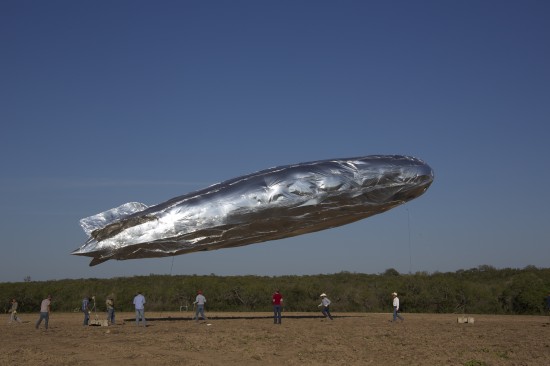
Hindenburg model (Courtesy: Discovery Channel)
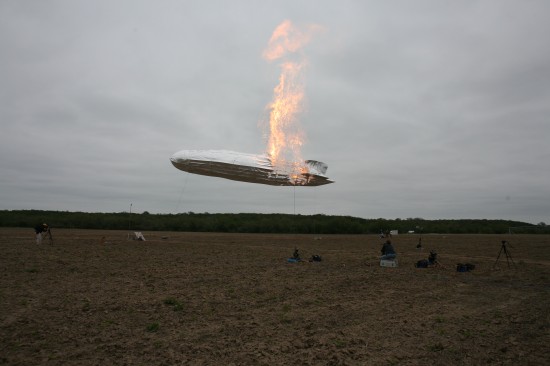
Hindenburg model burning
The use of such large scale models (over 80 feet in length) was itself a real first. In addition the team replicated some of the key experiments done immediately after the crash in 1937 (such as the analysis of the electrostatic properties of the ship’s fabric covering done in Germany by Dr. Max Dieckmann), and explored a theory about the spread of the fire that has not been discussed in any previous documentary.
Although I have studied the Hindenburg for decades these experiments brought to life for me, in a vivid and dramatic way, various phenomena that had been purely theoretical before.
I just had a chance to see the rough cut and I am very pleased with the project, which was the result of months of hard work by the director, producers, and a large and enthusiastic crew. We had access to the impressive facilities and expertise of the Southwest Research Institute in Texas, and a great team that included presenter Jem Stansfied, who has a degree in aeronautical engineering, and documentary filmmaker Nic Young, who was determined to do justice to the science while keeping it accessible to the general public. And I need to give a shout-out to my colleagues Patrick Russell of Faces of the Hindenburg and Cheryl Ganz of the National Postal museum, who were wonderful resources as always.
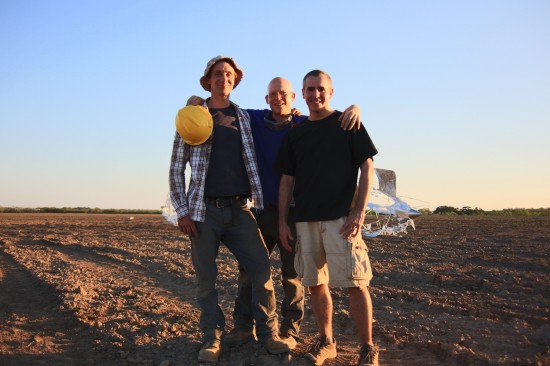
Jem Stansfield, Steve Wolf, and Dan Grossman (Courtesy: Discovery Channel)
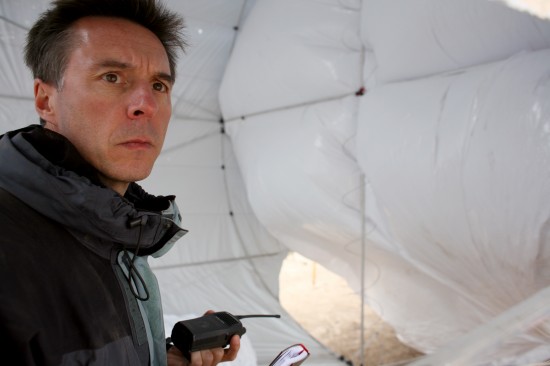
Director Nic Young
Participating in this project also gave me new insights into the Hindenburg in ways I had not anticipated. If nothing else, simply working that closely with vast amounts of hydrogen gave me a new sense of how zeppelin crews might have felt and a new understanding of why they were so comfortable working with a substance that is so inherently dangerous.
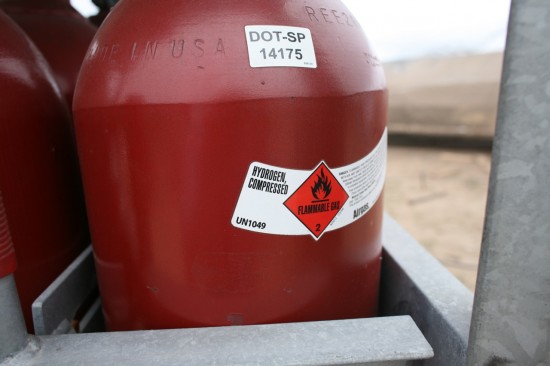
I have studied hydrogen for decades but this was the first time I have been right up close to the actual stuff; as we were building the models I was inside the hull, with my hands right up against the gas cells feeling their level of inflation. I have always assumed it must have been at least a little intimidating to walk through the hull of the Hindenburg, surrounded by all that flammable gas, but working inside our models, surrounded by giant bags of hydrogen, I felt perfectly at ease. We followed safety procedures established by the experts at SWRI and I didn’t feel the slightest fear; I was literally surrounded by hundreds of cubic meters of hydrogen and I felt as comfortable as I do in my own house, and I think every other member of the crew felt the same way. I came away with a personal insight into how and why the men of the Zeppelin company felt so comfortable working with a gas that we now view with such fear.
I am very glad I decided to participate in this project. It was fascinating from a scientific and technical perspective, it gave me new insights into the minds of the zeppelin crews, and it was great to work with such wonderful people. But let’s be totally honest. I spent a week building giant models and then blowing them up. Now if that isn’t every boy’s idea of a damn good time, I don’t know what the hell is.
Behind the Scenes
Here are some photos from the set that I thought you might enjoy.
(All photos, unless otherwise credited, are © Dan Grossman 2012).
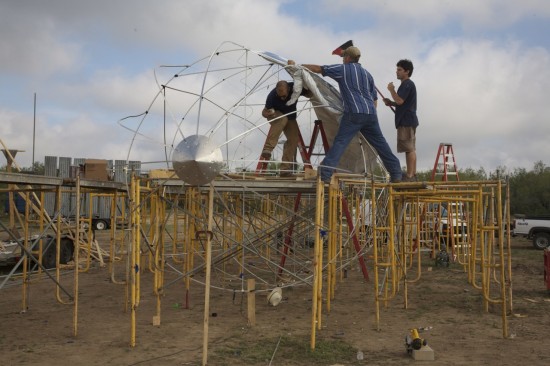
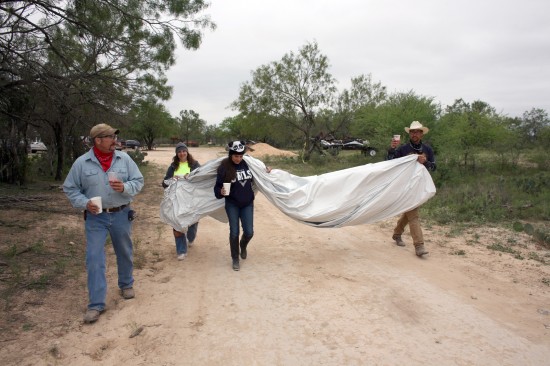
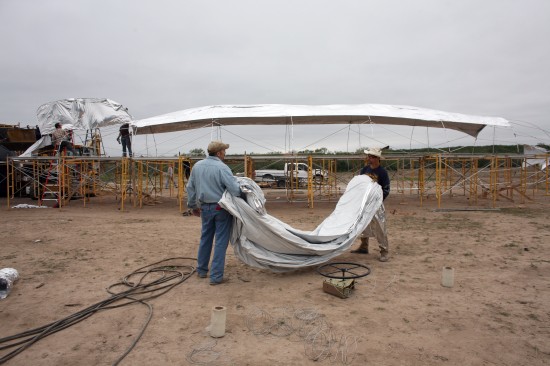
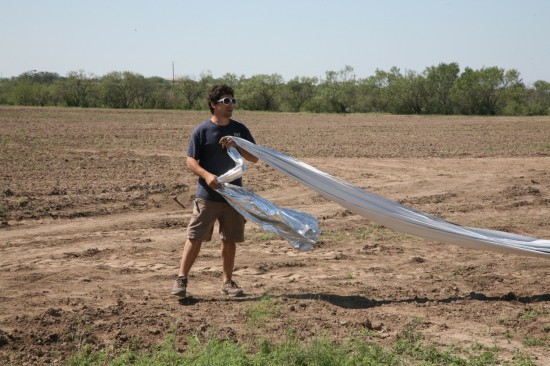
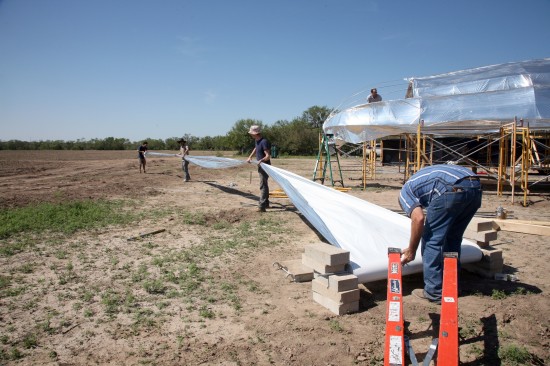
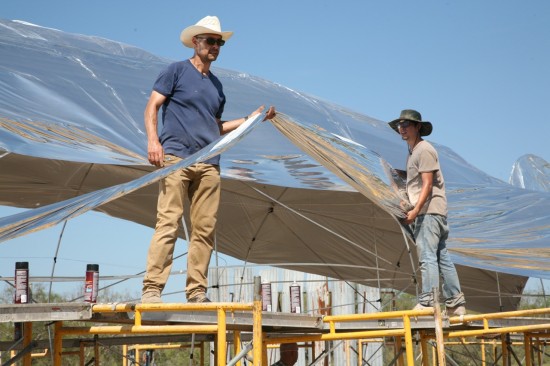
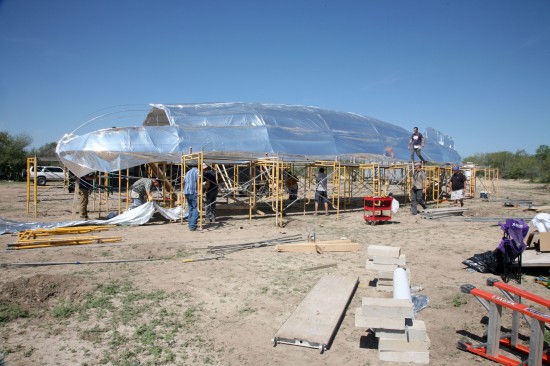
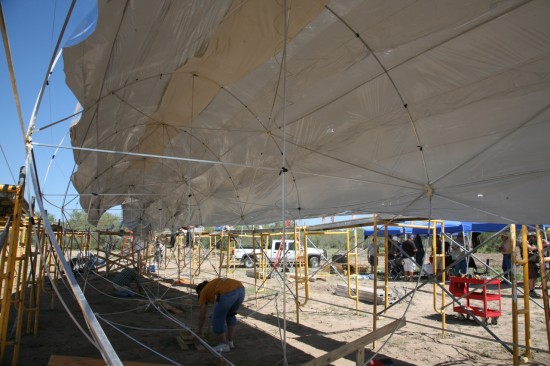
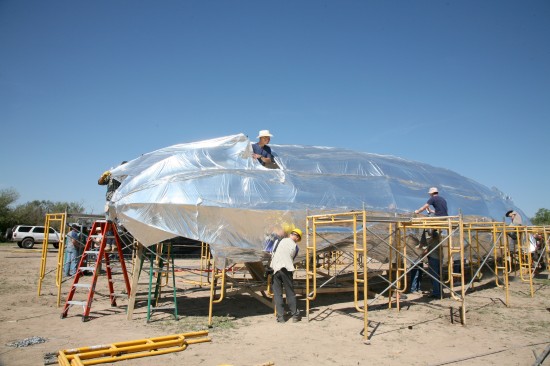
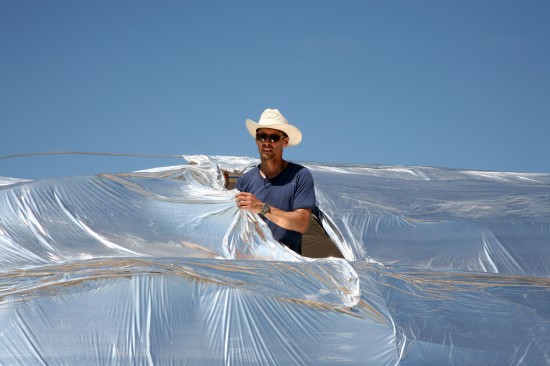
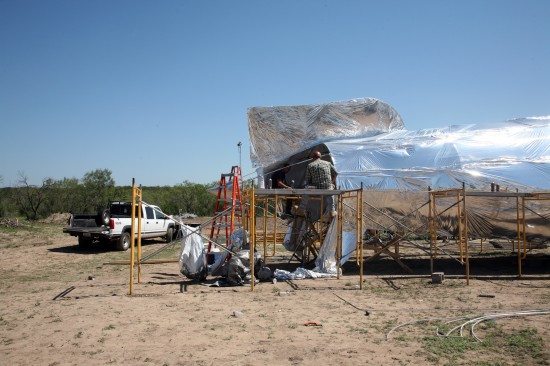
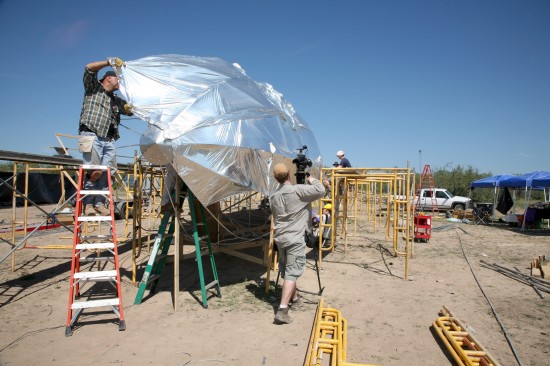
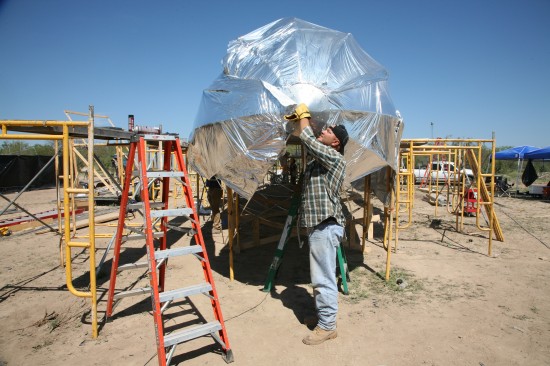
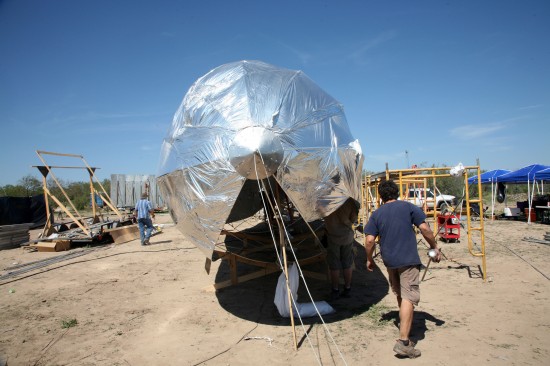
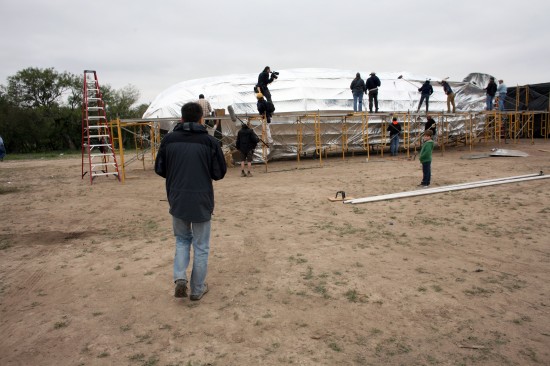
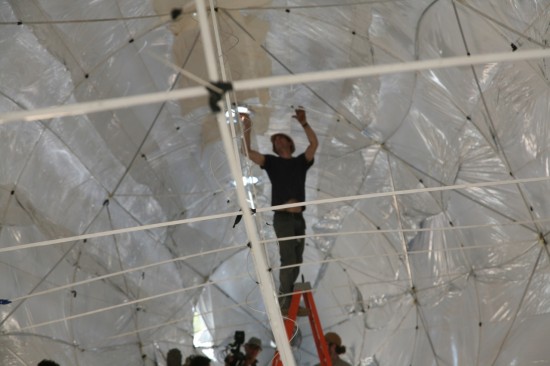
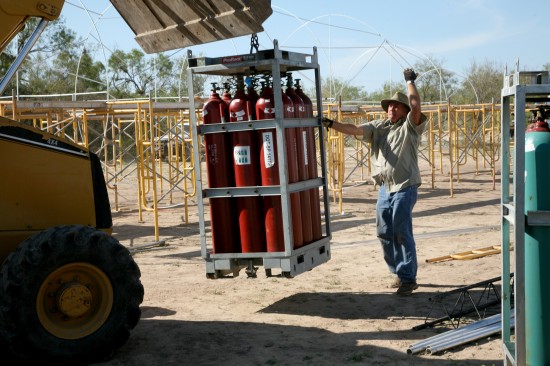
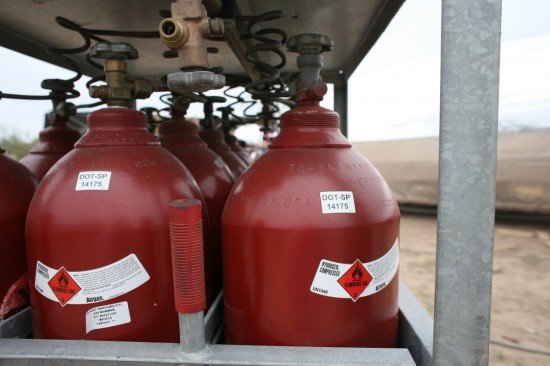
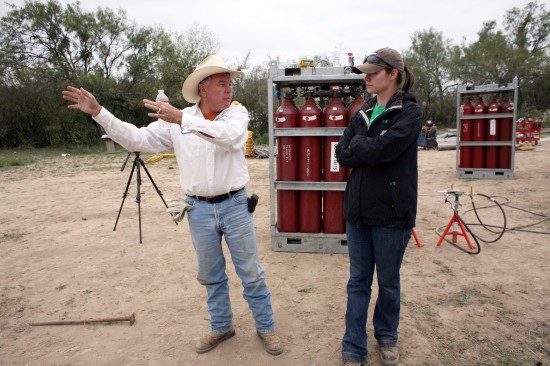
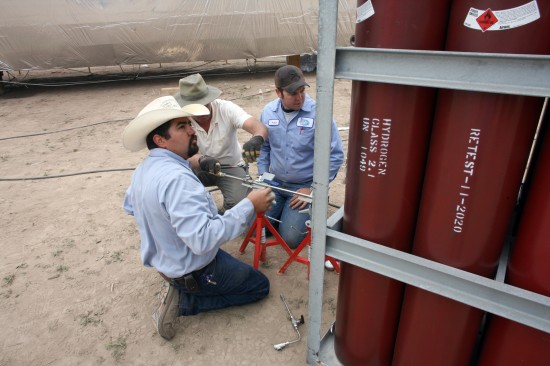
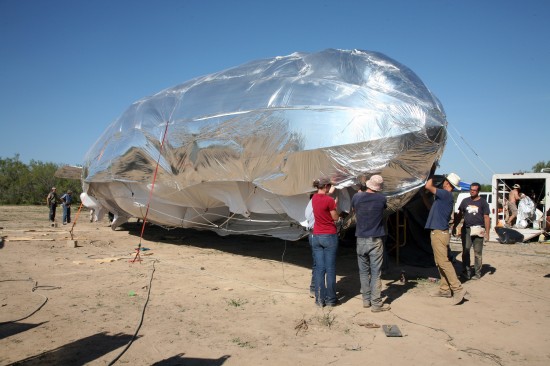
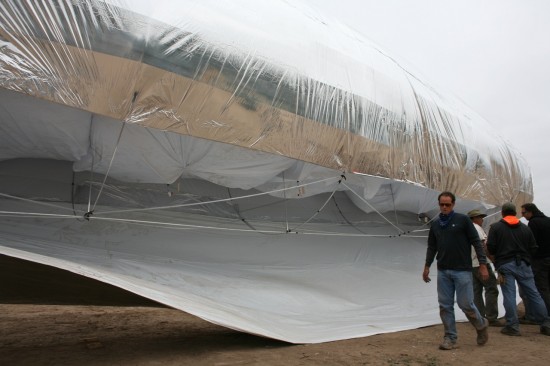
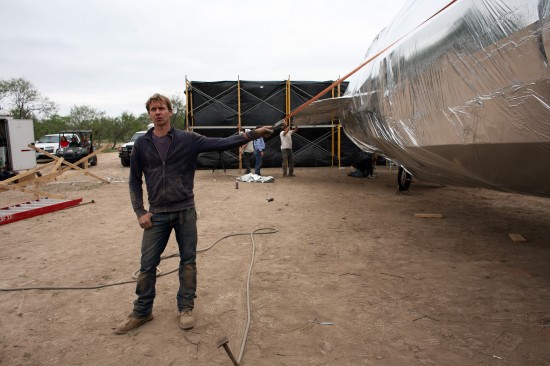
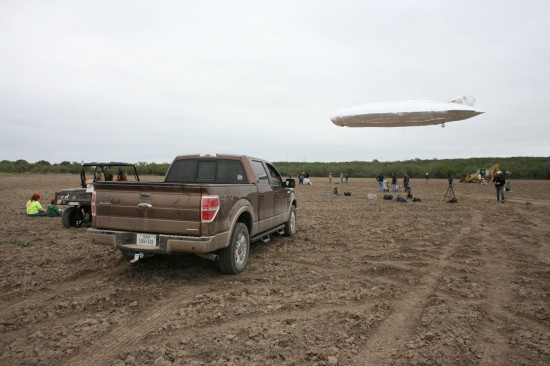
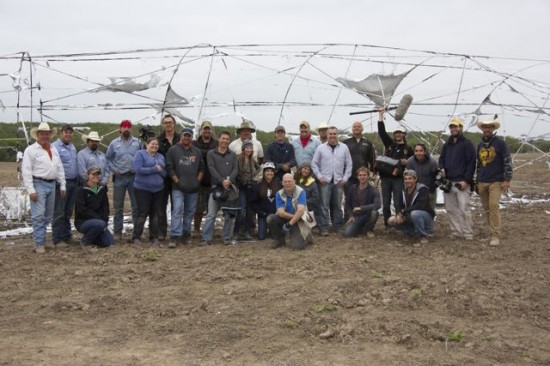
The crew of “What Destroyed the Hindenburg” (Courtesy: Steve Wolf)
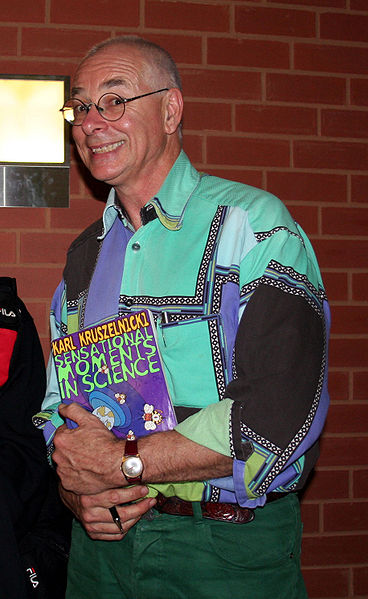

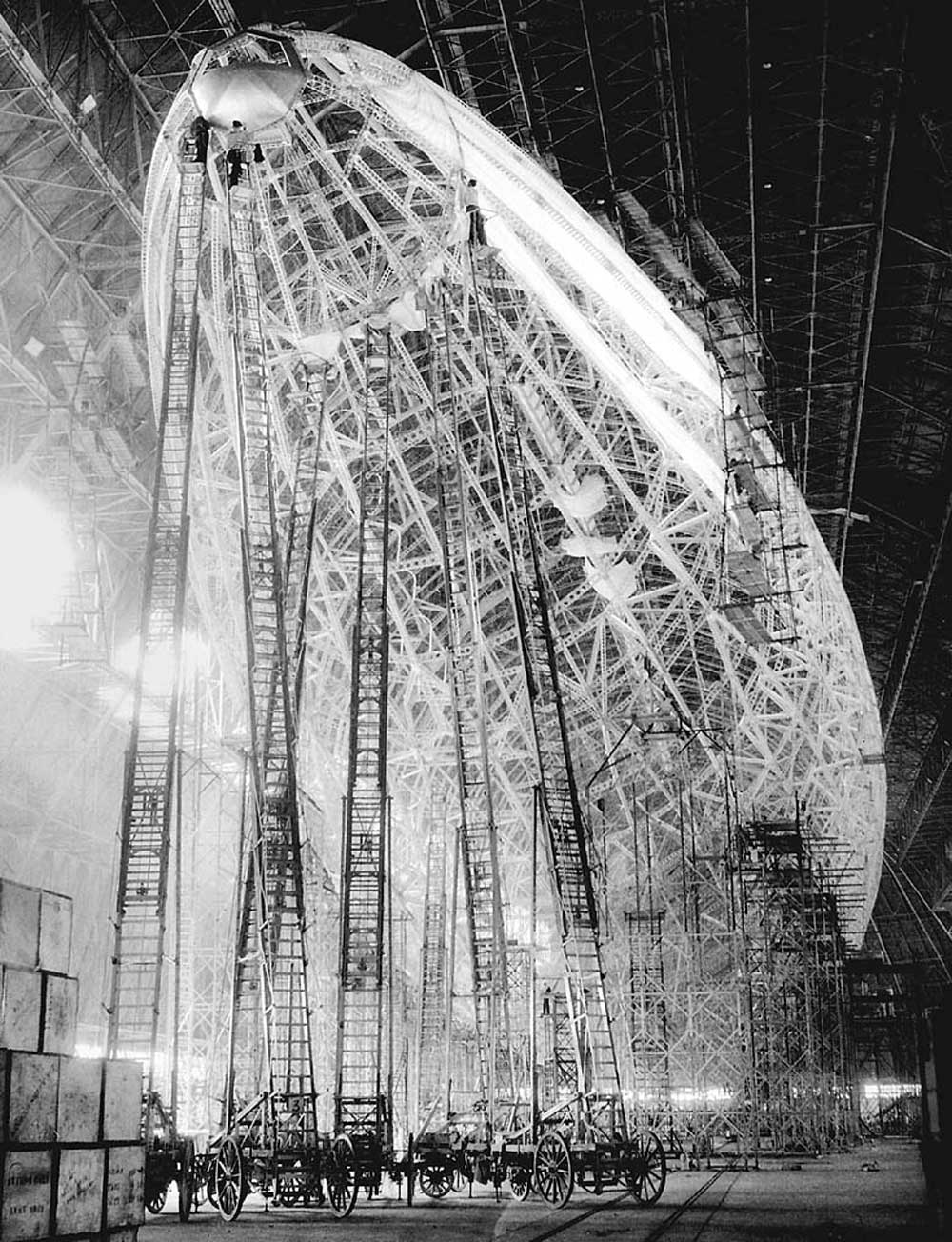

Neat photos (Then again, this is coming from the guy who has to watch films with the directors’ commentary on!) By any chance would you know the material that the crew used for the airships’ skin?
LOL, of course I know; I was there working on the models. 🙂
We used Mylar.
The hydrogen/air explosion of the reconstruction matches well with the start of the actual fire, but the subsequent spread of the fire through the model diverges more and more from that of the original disaster. The propagation of the fire downwards through the structure of the model was much reduced, could this be because the materials of the model did not give off as much radiant heat as the original materials when they burned?
The reconstruction did not take account of the probable damp condition of the outer fabric and I have read a statement somewhere (but I cannot recollect where) that the starboard side, away from the news cameras, had dried out because it had been in sunshine. Are there any photographs of the spread of the fire along the starboard side? The fire on the port side appears in many places to break through from the back, which suggest that it was caused by radiant heat from behind, but the radiant heat from the hydrogen would have been insignificant, because hydrogen burns with very little radiant heat – and most of the hot combustion gasses would have gone upwards.
The gasbags would have been protected from contact with oxygen on the inside until the hydrogen had gone; presumably they would have collapsed downwards by the time they could have burned, so where did the radiant heat come from? Have there been any experiments on how a hydrogen-filled gasbag collapses when fired from the top?
Might the fire have propagated forwards much faster on the starboard side outer covering? The gasbags would have initially protected the port side covering from the radiant heat of the burning starboard side and then progressively exposed it as they collapsed. The burning pattern of the port side is consistent with that.
As a footnote, the word “volatile” is not a synonym for “potentially explosive”.
What sort of safety considerations are required with hydrogen? Aside from not intentionally lighting it and being mindful that it is combustible, are there extra necessary precautions? I ask because I’m working on a 20 foot blimp that I intend to fill with hydrogen since it’s 1/4 the cost of helium. To me it makes sense to use hydrogen on an unmanned system given the drastic reduction in cost.
In response to your question – We urge great caution!!! In fact your safety and those of others warrants the use of helium no matter what the costs. You better check with your insurance company too – you may not have coverage for this endeavor.
You are playing with fire – first and foremost. Keep in mind back in the day of these ships they had acquired vast skill and special equipment was available to them for handling the gas. This would include but not be limited to the following:
All metal pipes, fittings, fixtures, connections would be of brass/bronze etc (to prevent any possible sparks). Plastics were out of the question.
This would include all kinds of tools used to perform tasks.
Special shoes & clothing was the order of the day. Plain cotton clothing worn to help reduce static charges. No nylon or any synthetic cloth was used. Sneekers were worn instead of leather sole shoes to prevent sparks from heel nails.
Ventilation is critical with max CFM Fresh air at all times with Positive air pressure in a given area. What is need would be equal to a deVilbis air flow system.
The structure your working in has too be of proper material so as not to foster or transmit any type of electrical charges, that also means light fixtures, switches & plugs. All floors & decks will need to free of rugs, carpets only plain
concrete or tile etc.
Hydrogen gas has a bad habit of building up or collecting into nooks & pockets then its boom time.
In the final analysis you have to ask yourself that famous Clint Eastwood question:
“Do you feel LUCKY ……. P”
G. W. E. – NAVAL AIRSHIP ASSOCIATION: http://www.naval-airships.org also on Facebook
Many times in each trip the gas exit shafts were filled with a hydrogen air mixture. Each time this mixture was flushed out with the movement of the Zeppelin through the air. When hydrogen and air mix together an explosive mixture is formed which if ignited will detonate with great violence. It only takes a very small amount of energy to cause this detonation and it cannot be stopped. Hydrogen should not be mixed with air in enclosed space. The gas exit shafts were designed for helium which cannot burn. They relied on the experience of the captains to prevent disaster. The luck ran out on the last flight. The use of gas exit shafts on the Hindenburg was a mistake when used with Hydrogen.
sorry about posting twice it didn’t go where i wanted it too! :/ hahaha 🙂
Stu;
It really is great discussing such matter’s with the likes of my fellow LTA Advocates not many people around me are positive on such matters they laugh and joke every time i mention Zeppelin/Airships but when i explain about the Crafts themselves and they low and behold are in Aww at such a spectacle of Grace and majesty in the sky’s!! 😀 they may not be interested as i am but it’s a start when they dop there jaw and start asking me questions. HOW BIG?? how fast?? and OMG how Luxurious?? haha i love it but anyway i was wondering if you may have Facebook?? so we could chat on a easier source and if you or i like post our thought’s up here for all the LTA Advocates to see and agree or disagree with. haha looking forward to talking with you soon.
Regards: Jason Wallace
For purposes of privacy, perhaps I can set up a Facebook page on LTA stuff just for people like you and I to chat. My Facebook page is basically private now, and I would like to keep it that way. I sincerely do want to share thoughts with you and others on LTA possibilities. I am hoping the folks from Airship Ventures out in Sunnyvale remain in the LTA chat loop and we can find out more about what they’re up to. Thanks for the sentiments.
No Probs Stu i understand all about Privacy and i respect that it’s been great Talking with you on such Awesome Areas of the LTA Industry! 🙂 i Sincerely hope each and every one of my Fellow LTA Advocates have a merry Christmas and a safe and Happy New Year!! 😀 and looking forward to another year of Great LTA Adventure’s and News!! From both the Past the Present and Especially the FUTURE!! 😀 I WISH YOU ALL A MERRY CHRISTMAS AND A HAPPY NEW YEAR!!
Very good documentary Dan. Enjoyed it very much. What would have been nice to show was the flight track of the Hindenberg on it’s final approach to LAS. (Source: HIndenberg – an illustrated history – Rick Archbold, pp. 202 illustration of landing approach):
1900 hrs: Altitude 650 ft. LZ129 approaches from SW for field inspection.
1908 hrs: LZ129 just made full speed turn to port to start circling landing field.
1911 hrs: Altitude 590 ft. LZ129 turns at full speed back to landing area, valves gas 15 seconds (first of several gas releases to reduce altitude) (RECENT DOCUMENTARY STATES THIS WAS TO TRIM THE SHIP)
1912 hrs: LZ129 engines idle ahead, ship slows forward momentum.
1914 hrs: Altitude 394 ft. Aft engines full astern.
1918 hrs: In quick sucession; 300kg, 300kg, and 500 kg water ballast released aft to correct slight heaviness.
1921 hrs: Altitude 295 feet, first mooring line dropped from bow.
1925 hrs: First flame appears.
I believe Capt. Pruss was incorrect to do that full speed turn at 1908 hrs. Remember, he was scheduled to land at LAS earlier that day, but was delayed due to stormy weather in the area. Once LAS cleared the LZ-129 to land, Pruss brought her in mindful of the fact that he was on a schedule altered by the storm delay, and any further delays were unacceptable. There is an account where Dr. Eckener scolded Pruss for his short cuts in handling airships. There may have been some disagreement between the two on how the airship was supposed to be flown, Eckener being very conservative and cautious with his airships. One thing’s quite probable; Eckener had a longer flight record of safety in many more difficult conditions, and in hydrogen filled passenger airships than Pruss did.
The documentary research was fascinating with the test models of the LZ129. The final and third model supports the theory of a gas leak and spontaneous combustion from static discharge most probably when the circuit was closed with the mooring lines making contact with the wet ground.
A captain of a tugboat in NY has a blog in which he described a USCG helo rescue. The cardinal rule when a helo is over you and lowering a basket is don’t touch the basket until the basket touches the ground or the vessel first. Otherwise, you’ll be in for a nasty shock from the static electricity generated by the helocopters blades through the air. The total swept area of a helo’s blades is less that the total swept area of the LZ129’s four huge wooden propellors which were running full speed through the approaches to the landing – generating lots of static electricity. A huge hull of an airship not properly bonded would probably have possessed quite a similar charge, that when mixed with a rich, oxygen-laden mixture of hydrogen, recently liberated from the LZ129’s aft cells, set up the accident.
Thanks Dan and congrats on your work.
Stu;
It really is great discussing such matter’s with the likes of my fellow LTA Advocates not many people around me are positive on such matters they laugh and joke every time i mention Zeppelin/Airships but when i explain about the Crafts themselves and they low and behold are in Aww at such a spectacle of Grace and majesty in the sky’s!! they may not be interested as i am but it’s a start when they dop there jaw and start asking me questions. HOW BIG?? how fast?? and OMG how Luxurious?? haha i love it but anyway i was wondering if you may have Facebook?? so we could chat on a easier source and if you or i like post our thought’s up here for all the LTA Advocates to see and agree or disagree with. haha looking forward to talking with you soon.
Regards: Jason Wallace
Dear Dan,
I just finished watching the documentary on Discovery HD. It was wonderful!! The last theory really blew my mind! There were others who’d seen the “blue charge” on front of the fin, but not on top like the gentleman and hsi father did due to their great vantage point. Wonderful labor of love! I commend you and the crew for your “sleuth work” and model building work!
PS: My Mom thinks that you’re very handsome!
You are full of surprises Dan. Thanks for sharing your works. -Louis
Thanks, Louis! 🙂
I was one of the Scientists from SwRI on this project. We had a ball working on it. Dan was a great resource on the history. My crew and I would like to thank him and the Blink Entertainment team for the wonderful opportunity to showcase our laboratories and capabilities.
There is a lot of interest in Aerostats as surveillance systems in the military and for border security. Hydrogen is a much cheaper gas and is easily generated on location.
Dr. Matthew S. Blais, Director of Fire Technology, Southwest research Institute
Thank you Matt. It was a pleasure and a privilege to work with you!
For my readers, Dr. Blais is a brilliant scientist and I learned a lot from him, for which I am very grateful. And he is a true gentleman as well.